
Sauna vs Steam: Which Is Best for You?
A Complete Wellness Guide

What is sauna?
A sauna uses dry heat, traditionally produced by hot stones, electric heaters, or infrared panels.
-
Temperature: 70–100°C (158–212°F)
-
Humidity: Low (5–20%)
-
Types: Traditional sauna, infrared sauna, wood-fired sauna
Saunas create intense dry heat that raises body temperature and encourages deep sweating.
What is a Steam Room?
A steam room uses moist heat, created by a steam generator that fills the room with warm vapour.
Temperature: 40–50°C (104–122°F)
Humidity: Nearly 100%
The high humidity creates a gentler heat that feels moist and soothing, especially for the respiratory system.
Key Differences Between Sauna and Steam
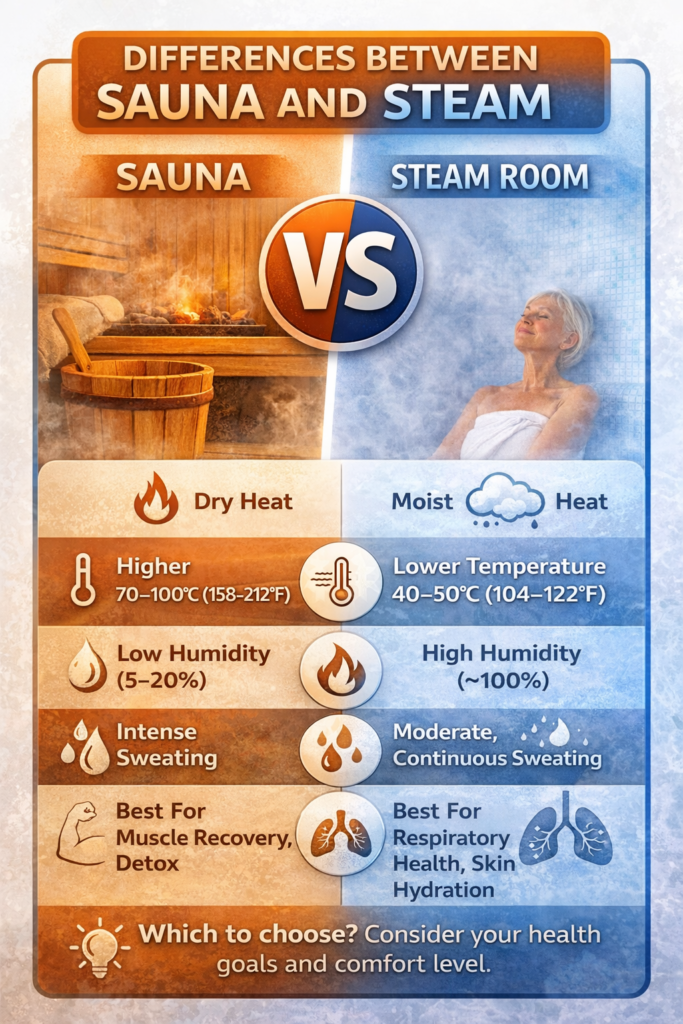
Feature
Sauna
steam room
Heat Type
Temerature
Humidity
Sweating
Best for
Dry Heat
Higher
Low
Intense
Muscle recovery, detox
Moist Heat
Lower
Very High
Moderate but continuous
Respiratory health, skin hydration.
Understanding these differences helps you choose the option that best matches your wellness needs.
Health Benefits of Saunas
1. Deep Detoxification Through Intense Sweating
Saunas are particularly effective for detoxification. The dry heat raises core body temperature quickly, leading to heavy sweating, which helps flush out toxins such as heavy metals and environmental pollutants.
This makes saunas ideal for people seeking:
-
Full-body detox
-
Improved energy levels
-
Support for metabolic health
2. Muscle REcovery and pain relief
Saunas are particularly effective for detoxification. The dry heat raises core body temperature quickly, leading to heavy sweating, which helps flush out toxins such as heavy metals and environmental pollutants.
This makes saunas ideal for people seeking:
-
Full-body detox
-
Improved energy levels
-
Support for metabolic health
3. Cardiovascular and Circulation Benefits
Dry heat causes blood vessels to dilate, improving circulation and increasing heart rate. Some studies suggest regular sauna use may support heart health in a way similar to light exercise.
Benefits include:
-
Improved blood flow
-
Reduced blood pressure (over time)
-
Better cardiovascular endurance
4. Stress Relief and Mental Clarity
Saunas are particularly effective for detoxification. The dry heat raises core body temperature quickly, leading to heavy sweating, which helps flush out toxins such as heavy metals and environmental pollutants.
This makes saunas ideal for people seeking:
-
Full-body detox
-
Improved energy levels
-
Support for metabolic health
5. Better Sleep Quality
The post-sauna cooling effect helps regulate sleep hormones like melatonin. Many people find that evening sauna sessions help them fall asleep faster and enjoy deeper sleep.
Health Benefits of Steam rooms
1. Respiratory Health and Breathing Support
Steam rooms are especially beneficial for the respiratory system. The warm, moist air helps:
Open airways
Loosen mucus
Reduce nasal congestion
Soothe irritated lungs
Steam therapy is ideal for people experiencing colds, sinus issues, allergies, or dry air conditions.
2. Skin Hydration and Cleansing
High humidity opens pores and hydrates the skin. Steam rooms help:
Remove dirt and oil from pores
Improve skin hydration
Promote a healthy glow
Steam is particularly suitable for people with dry or sensitive skin.
3. Gentle Detox and Relaxation
While sweating is less intense than in saunas, steam rooms still promote detoxification through consistent sweating. The lower temperature makes steam rooms more comfortable for longer sessions.
4. Stress Reduction and Relaxation
Steam rooms provide a soothing, spa-like environment that helps calm the nervous system. The warm moisture relaxes muscles and encourages deep breathing, making it ideal for mindfulness and relaxation.
5. Joint Comfort and Mobility
The moist heat penetrates joints and connective tissues, helping reduce stiffness and discomfort. This can be especially helpful for people with mild joint pain or mobility issues.
Sauna vs Steam: Which Is Better for Specific Goals?
For Detoxification
Winner: Sauna
The higher temperature and dry heat promote deeper sweating and more intense detoxification.
For Respiratory Health
Winner: Steam Room
Moist air supports lung health, clears congestion, and improves breathing.
For Muscle Recovery
Winner: Sauna
Dry heat improves circulation and speeds up muscle repair.
For Skin Health
Winner: Steam Room
Steam hydrates skin and opens pores, while saunas improve circulation and skin tone.
For Stress Relief
Both Are Excellent
Choose based on comfort — sauna for intense heat lovers, steam for gentle relaxation.
For Beginners or Heat Sensitivity
Winner: Steam Room
Lower temperatures make steam rooms easier to tolerate for new users.
Can You Use Both Sauna and Steam?
Yes — and many wellness experts recommend it.
Alternating between sauna and steam allows you to:
Experience full detox benefits
Support respiratory and skin health
Prevent overheating
Keep your wellness routine balanced
Some spas even recommend steam first (to hydrate and open pores), followed by sauna for deeper sweating.
How often should you use sauna or steam?
General recommendations:
2–4 sessions per week
10–20 minutes per session
Stay hydrated
Always listen to your body
Beginners should start slow and gradually increase session time.
Final Verdict: What’s Best for You?
There is no single “better” option — the best choice depends on your personal wellness goals.
Choose a sauna if you want:
Deep detox
Muscle recovery
Intense heat therapy
Choose a steam room if you want:
Respiratory support
Skin hydration
Gentle relaxation
For optimal wellness, incorporating both sauna and steam into your routine offers the most balanced benefits.